
31°C, New York


Notification products, updates
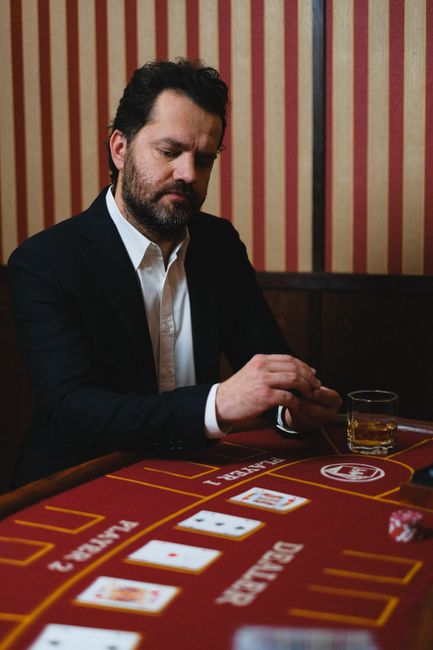
Most players obsess over the wrong numbers. They memorize slot RTPs like baseball stats, chase "hot" tables, and swear a machine is due for a payout after a cold streak. Meanwhile, the people who genuinely understand iGaming — the ones who grind out a living from poker, exploit soft sportsbook lines, and treat slots as entertainment with a known cost — focus on a handful of variables that actually move the needle. This piece is about those variables.
Return to Player (RTP) is the percentage of all wagered money a game is mathematically expected to return to players over millions of spins. A 96% RTP slot keeps roughly 4 cents of every dollar wagered — that's the house edge. Sounds small until you realize a player spinning $2 a spin at 600 spins per hour is cycling $1,200 an hour, which means an expected loss of about $48 per hour at that 96% figure.
Here's the part casual players miss: RTP is a theoretical average across an effectively infinite sample. In a single session of 300 spins, your actual result could be anywhere from +400% to -100%. The variance swamps the edge in the short term. RTP matters most when you play a lot, and it matters almost nothing for a 45-minute Saturday session.
A practical filter: anything under 95% on a video slot is worth avoiding unless the mechanics really entertain you. Modern high-quality releases cluster around 96%–96.5%. Some jackpot-linked progressives sit at 92%–94%, which is fine if you value the lottery-ticket thrill, but don't pretend it's a value play.
Two slots can share a 96% RTP and feel like completely different games. That's variance — how spread out the outcomes are around the average.
Bonus buy features are pricing variance directly. A 100x buy on a slot means you're paying 100 times your stake for a guaranteed trigger. In a 96.5% RTP game, that feature has an expected return of roughly 96.5x your buy — you're sacrificing a tiny bit of edge for zero trigger uncertainty. The trade-off is that a single buy either pays 20x or 2,000x, and you feel every swing.
If you're playing a high-variance slot at $1 a spin with a 20% hit frequency, prepare for stretches of 30+ dead spins that are statistically normal, not a rigged game. Budget at least 250–400 units for those sessions. On a $500 bankroll, that's $1.25–$2 spins, not $5. Readers looking for specifics may like SHBET.
Sports betting rewards a different skill set. The single best predictor of long-term profitability is beating the closing line — the final odds before kickoff, which represent the market's most efficient consensus.
If you consistently bet a team at -110 and it closes at -130, you're getting genuine value. Over 500 bets, that edge compounds. If you're routinely on the other side, no amount of "research" saves you.
The vig (juice) matters more than people think. Standard -110/-110 pricing implies a 4.76% hold. A sharp book offering -105 on both sides cuts that to 2.38% — literally halving the tax on every bet. Over a year of 1,000 wagers at $100 each, that difference is thousands of dollars in expectation.
Having accounts at four or five reputable books (where legal in your jurisdiction) and always taking the best available price on the same market is the closest thing to a free lunch in this industry. It's boring. It works. Sharp bettors do it every single time. Those comparing choices often turn to SH BET.
Poker is the one vertical where the house doesn't take a cut of your action the same way — it takes rake, a fee on pots. Rake structures vary enormously:
Unlike slots or sports betting in most markets, a disciplined poker player who studies ranges, respects position, and avoids tilt genuinely has a long-term edge. It's work, though. The recreational player who plays 100 hands a week for fun is just donating to a slightly different house.
If you take nothing else from this piece, take these:
iGaming is entertainment with a price tag, and that's not a cynical framing — it's freeing. Once you accept that slots cost roughly $X per hour to play, that sports bets are priced by the market, and that poker is the one game where skill flips the math, you stop seeing mythic "hot" machines and start seeing options. Some nights you want a $50 lottery ticket with a 50,000x ceiling. Other nights you want a grindy low-variance slot and three hours of relaxation. Both are fine. What isn't fine is playing blind, assuming the game owes you something, or believing that yesterday's losses influence tomorrow's spins. The math isn't cruel — it's just indifferent, and once you understand it, you can play with it instead of against it.

Bailey's Menswear shares practical, down-to-earth guidance on men's fashion, grooming and style advice for readers across the UK.
Stay Tuned With Updates


Leave A Comment