
31°C, New York


Notification products, updates
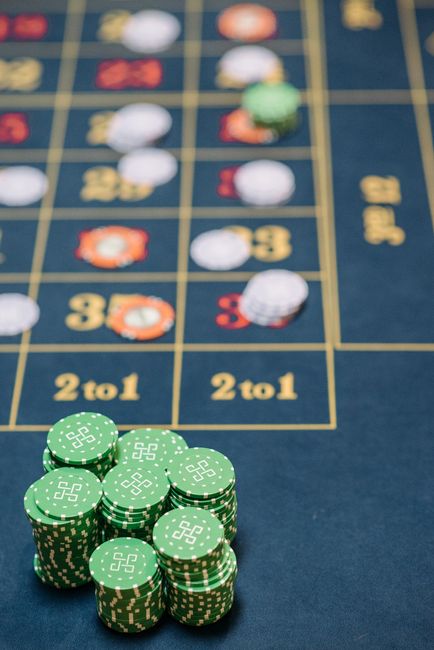
You've probably seen the ads: a grinning influencer hits a six-figure slot jackpot on their phone, and suddenly everyone thinks online casinos are an ATM. Here's the thing nobody puts in those clips—the payout percentage on that slot was likely 96%, meaning the house kept 4% of every dollar wagered over millions of spins. The influencer got lucky, not smart. If you want to actually understand iGaming in 2025, you need to think like a casino operator, not a lottery winner.
Every game in an online casino has a built-in mathematical advantage for the operator, but the margin varies wildly. Blackjack with perfect basic strategy? The house edge can drop to 0.5%. American roulette with its double zero? A brutal 5.26%. Slots typically range from 2% to 10% depending on the game and the jurisdiction's minimum payout rules.
Why does this matter? Because your expected loss per hour is a simple formula: average bet × bets per hour × house edge. A $1 bet on a 96% RTP slot spinning 600 times an hour gives an expected loss of about $24. On a 99.5% RTP blackjack table with the same bet and 60 hands per hour, that loss drops to $0.30. Same bankroll, radically different experience. The game you choose is the single biggest decision you'll make.
Here's a concrete comparison for a $1,000 bankroll:
The lesson isn't that you should never play slots—it's that you should know what you're paying for entertainment. If slots give you $50 of fun per hour, that's a fair trade. If you think you're beating the machine, you're not.
Poker is the one game in the iGaming ecosystem where skill actually flips the math. The house doesn't play against you; it takes a rake—typically 5% of the pot up to a cap of $3 at most cash tables. That rake is a tax on every hand, not on your win rate. A skilled player can beat the rake and profit; a recreational player will donate to the better players at the table.
What separates winning poker players from losing ones? It's not intuition or 'reading people' in the Hollywood sense. It's this:
The poker ecosystem in 2025 is tougher than ever. Solvers and AI training tools have raised the floor for everyone. If you're playing micro-stakes online, you're facing players who've studied preflop charts. That's the reality. But the flip side is that live poker rooms, especially in places like Texas and Florida, are still full of casual players who just want to gamble. If you're serious about poker, live low-stakes games are often softer than online micros.
Let's be honest—slots are the engine of the iGaming industry. They generate 70-80% of casino revenue in most markets. Why? Because they're simple, fast, and psychologically engineered to keep you spinning. Modern video slots have dozens of paylines, bonus rounds, free spins, and cascading reels. The complexity is a feature, not a bug—it makes the payout structure opaque and the near-misses feel tantalizing.
But here's what smart players look at: volatility and RTP. A low-volatility slot like Starburst (96.1% RTP) pays small amounts frequently. A high-volatility slot like Book of Dead (96.2% RTP) might pay nothing for 100 spins, then hit a 5,000x multiplier. Neither is 'better'—they suit different bankrolls and temperaments. If you have $50 and want a long session, play low volatility. If you have $200 and want a shot at a big win, high volatility is your lane. If this is new to you, สล็อต is a sensible next read.
One more tip: always check the RTP listed in the game's help screen. Some casinos run lower-RTP versions of the same slot. A 94% version versus a 96% version costs you an extra $2 per $100 wagered. Over a thousand spins, that's real money.
Sports betting has exploded in the US since the Supreme Court struck down PASPA in 2018. Every major league now has official betting partners, and apps make it frictionless to put $10 on a Sunday afternoon game. But the math is brutal: standard point spread bets cost -110, meaning you risk $110 to win $100. That's a 4.55% house edge, and you have to win 52.4% of your bets just to break even.
Sharp bettors find edges by exploiting stale lines, shopping for the best odds across multiple books, and focusing on niche markets where the limits are low but the inefficiencies are high. The average recreational bettor doesn't do any of that. They bet on their favorite team, parlay everything, and wonder why their balance never grows.
If you're going to bet sports, do these three things:
iGaming regulations are tightening. In the UK, the Gambling Commission has capped slot spins at £2 for under-25s and introduced strict affordability checks. In the US, states like New Jersey and Pennsylvania have robust markets, but others like California remain a patchwork. What does this mean for players? Safer environments, but also fewer bonuses and more KYC checks.
Offshore casinos still exist, but they're risky. If a site doesn't have a recognized license from the UKGC, MGA, or a US state, you have no recourse if they refuse to pay. I've seen players wait months for withdrawals from unlicensed sites, only to get banned for 'bonus abuse' when they complain. The old adage applies: if the bonus looks too good to be true, it is.
Bottom line: stick to licensed operators, read the terms, and treat bonuses as what they are—marketing tools, not free money.
After years of watching players win and lose, I can tell you the successful ones share one trait: they treat iGaming as entertainment with a cost, not an investment. They set a monthly budget, they never chase losses, and they walk away when it stops being fun. The math guarantees the house wins in the long run—your job is to manage the short run.
So enjoy the slots, play some poker, put a few dollars on the game. But keep your expectations in check. The house always has an edge. The only question is how much you're willing to pay for the thrill.

Bailey's Menswear shares practical, down-to-earth guidance on men's fashion, grooming and style advice for readers across the UK.
Stay Tuned With Updates


Leave A Comment